.png)
Everything homeowners need to know before expanding their home — with real cost ranges, timelines, and the factors that matter most.
Adding square footage is one of the most powerful ways to improve your home’s comfort, functionality, and value. But it’s also one of the most misunderstood.
Many homeowners begin planning an addition with a simple question:
“How much does a home addition actually cost?”
The honest answer: it depends — and in a much bigger way than most people realize.
But once you understand what drives the cost of an addition, planning becomes far easier, and you can set realistic expectations from the start.
This comprehensive guide breaks down every variable so you know exactly what you’re paying for… and why.
1. The Short Answer: Typical Cost Ranges for Florida Home Additions
While every project is unique, here are realistic 2025 ranges for professionally built additions in Florida:
Small Additions (up to 250 sq. ft.)
-
$45,000–$75,000
Examples: small bedroom extension, office, bump-outs, expanding existing rooms.
Medium Additions (250–500 sq. ft.)
-
$75,000–$140,000
Examples: new living room, enlarged kitchen, guest suites, extended primary suites.
Large Additions (500–1,000+ sq. ft.)
-
$140,000–$300,000+
Examples: full primary suite additions, multi-room expansions, second-story additions.
High-Complexity or Structural Additions
-
$250,000–$500,000+
Examples: second floors, structural rebuilds, major roof framing changes, additions with luxury finishes.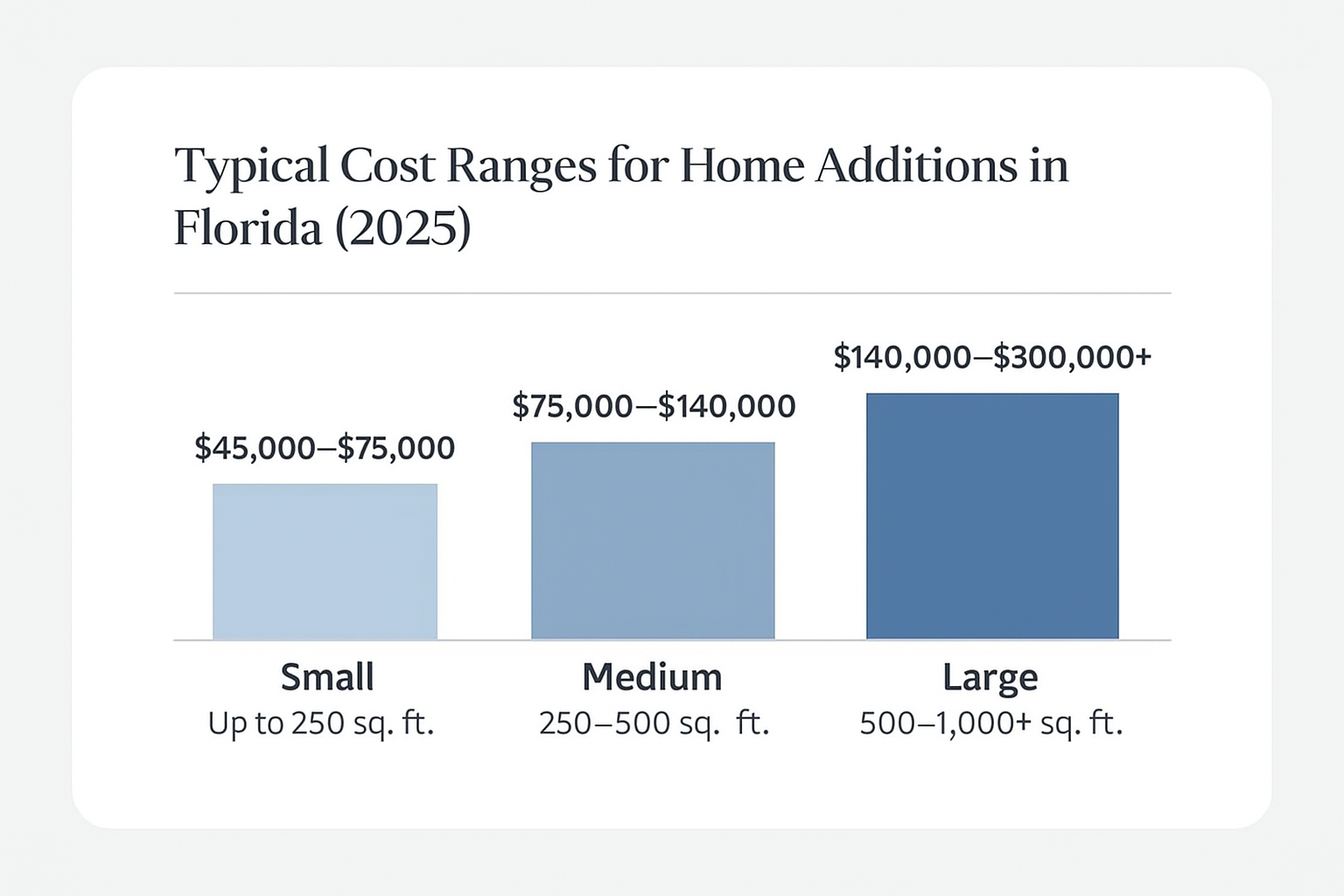
These ranges assume fully permitted, engineered construction performed to Florida Building Code standards — not handyman-level work or unlicensed “room add-ons.”
2. Why Home Additions Cost More Than Homeowners Expect
Most people compare additions to interior remodels (kitchens, bathrooms, flooring).
But additions are fundamentally different because they require creating a new structure that ties into an existing one.
That means you're paying for:
-
Foundation & slab work
-
Framing + structural engineering
-
Roof integration
-
Exterior tie-ins (stucco/siding/paint/windows)
-
Electrical + plumbing + HVAC
-
Insulation + drywall + finishes
-
Exterior access, site prep, and inspections
-
Full architectural and permit-ready drawings
Think of an addition as building a mini house attached to your home — not just updating an existing room.
3. What Actually Drives the Cost of a Home Addition
Below are the real cost drivers most homeowners don’t learn about until they’re deep in the process. Understanding these early prevents surprises.
A. Foundation & Structural Requirements.png?width=275&height=275&name=Avery%20Socials%20(3).png)
Why it matters:
Most additions require new footers, slab pours, structural tie-beams, or engineered support.
If soils need preparation or reinforcement, costs rise.
Typical range: $6,000–$25,000+
Higher when: elevated floors, poor soil, or hurricane-zone engineering is required.
B. Roof Modifications & Tie-Ins
Why it matters:
Your existing roof must be cut, reframed, reinforced, and blended into the new structure — one of the most complex parts of an addition..png?width=275&height=275&name=Avery%20Socials%20(4).png)
Typical range: $10,000–$40,000+
Higher when:
-
Changing ceiling heights
-
Reframing trusses
-
Matching older roofing systems
-
Adding dormers or architectural details
C. HVAC (Air Conditioning) Requirements
Why it matters:
Most homes’ existing A/C units are not sized for extra square footage.
A proper load calculation determines whether your current system can support the addition.
Your options:
-
Extend existing ductwork (lowest cost)
-
Add a dedicated mini-split (mid-range cost)
-
Install a new larger A/C system (higher cost, but best long-term)
Typical range: $3,500–$18,000
D. Electrical Upgrades
Adding rooms means adding circuits. Some homes require panel upgrades or whole-home load balancing.-1.png?width=300&height=300&name=Avery%20Socials%20(8)-1.png)
Typical range: $2,500–$12,000
Higher when adding:
-
A larger service panel
-
Heavy-load appliances
-
Smart home systems
E. Plumbing (If Adding Bathrooms/Kitchens)
Bringing plumbing into a new space always adds cost, especially when breaking slab or running new supply lines.
Typical range:
-
No plumbing: $0
-
Laundry room or small wet bar: $4,000–$12,000
-
Full bathroom: $12,000–$25,000+
F. Exterior Integration
This includes stucco, siding, exterior paint, window/door tie-ins, soffit and fascia, and making the addition look seamless.
Typical range: $4,000–$25,000+
G. Interior Finishes
Interior materials can swing the final cost significantly:
.png?width=350&height=350&name=Avery%20Socials%20(5).png)
- Flooring
-
Trim/casing
-
Lighting
-
Paint
-
Cabinetry (if applicable)
-
Tile or specialty finishes
Typical range:
-
Basic builder-grade: +$8,000–$18,000
-
Mid-grade: +$18,000–$35,000
-
High-end/luxury: +$35,000–$60,000+
4. Soft Costs: The “Invisible” Line Items Homeowners Aren’t Told About
These are essential to legally build an addition and protect your home value — but they’re often overlooked during early estimates.
Architectural Plans & Engineering
Required for permitting. Structural engineering is mandatory in Florida.
Typical range: $5,000–$18,000+
Permits & Impact Fees
These vary by county and project size.
Typical range: $1,500–$10,000
Inspections & Code Compliance
Plan reviews, structural inspections, electrical/plumbing/HVAC inspections, and energy code compliance all add time and cost — but ensure safety and longevity.
5. How Long Does a Home Addition Take?
Timeline varies based on permitting and complexity:
Design + Engineering: 3–6 weeks
Permitting: 4–12 weeks
Construction:.png?width=350&height=350&name=Avery%20Socials%20(7).png)
-
Small additions: 8–12 weeks
-
Medium additions: 12–20 weeks
-
Large additions: 20–32+ weeks
Total project duration from first meeting to final walk-through:
4–8 months, depending on scale.
6. How To Budget Confidently for a Home Addition
Here’s a simple rule:
Expect your final cost to fall between $300–$500 per square foot.
(Florida 2025 market — professionally built, not prefab structures)
Use the lower end for:
-
Simple rectangular rooms
-
Single-story additions
-
No plumbing
-
Basic finishes
Use the higher end for:
-
Bathrooms or kitchens
-
Structural modifications
-
Roofline redesign
-
Custom-level finishes
-
Two-story additions
7. The #1 Cost Factor: Design Decisions
Better design = better use of space = better ROI.-2.png?width=300&height=300&name=Avery%20Socials%20(6)-2.png)
Smart design reduces:
-
Wasted square footage
-
Structural changes
-
HVAC loads
-
Material costs
Poor design is the fastest way to overspend.
Avery’s design-first approach ensures your addition is functional, beautiful, and structurally sound before a single permit is submitted.
8. How To Avoid Costly Surprises
These three issues create most budget overages:
1. Unknown structural requirements
Older homes may have hidden issues: wiring, rot, foundation conditions.
Early inspections prevent surprises.
2. Undersized HVAC systems
This is the most common unexpected expense.
Always ask for a load calculation upfront.
3. Change orders on finishes
Choosing tile or flooring after budgets are set can dramatically affect cost.
Finalize design early.
9. Why Working With a High-Integrity Contractor Matters
Additions are not the place for low bids or guesswork.
The right contractor should offer:
✔ Transparent cost breakdowns
✔ Upfront discussions about HVAC, electrical, and structural needs
✔ Realistic timelines
✔ Permit and engineering management
✔ Regular communication
✔ A design-driven approach that prevents costly mistakes
Avery Construction has built additions throughout Tampa Bay for over 20 years — and our philosophy is simple:
No surprises. No shortcuts. Seamless, structural, long-lasting additions designed for how you live.
10. Ready to Explore Your Home Addition?
Whether you’re considering a small bump-out or a full second-story expansion, the first step is knowing what’s possible — and what it will realistically cost.
Use our Home Addition Calculator to get a personalized estimate, then book your consultation.
-1.png)

-1.png)